Synthetic Fuels: The tipping point where e-fuels either mature or stall
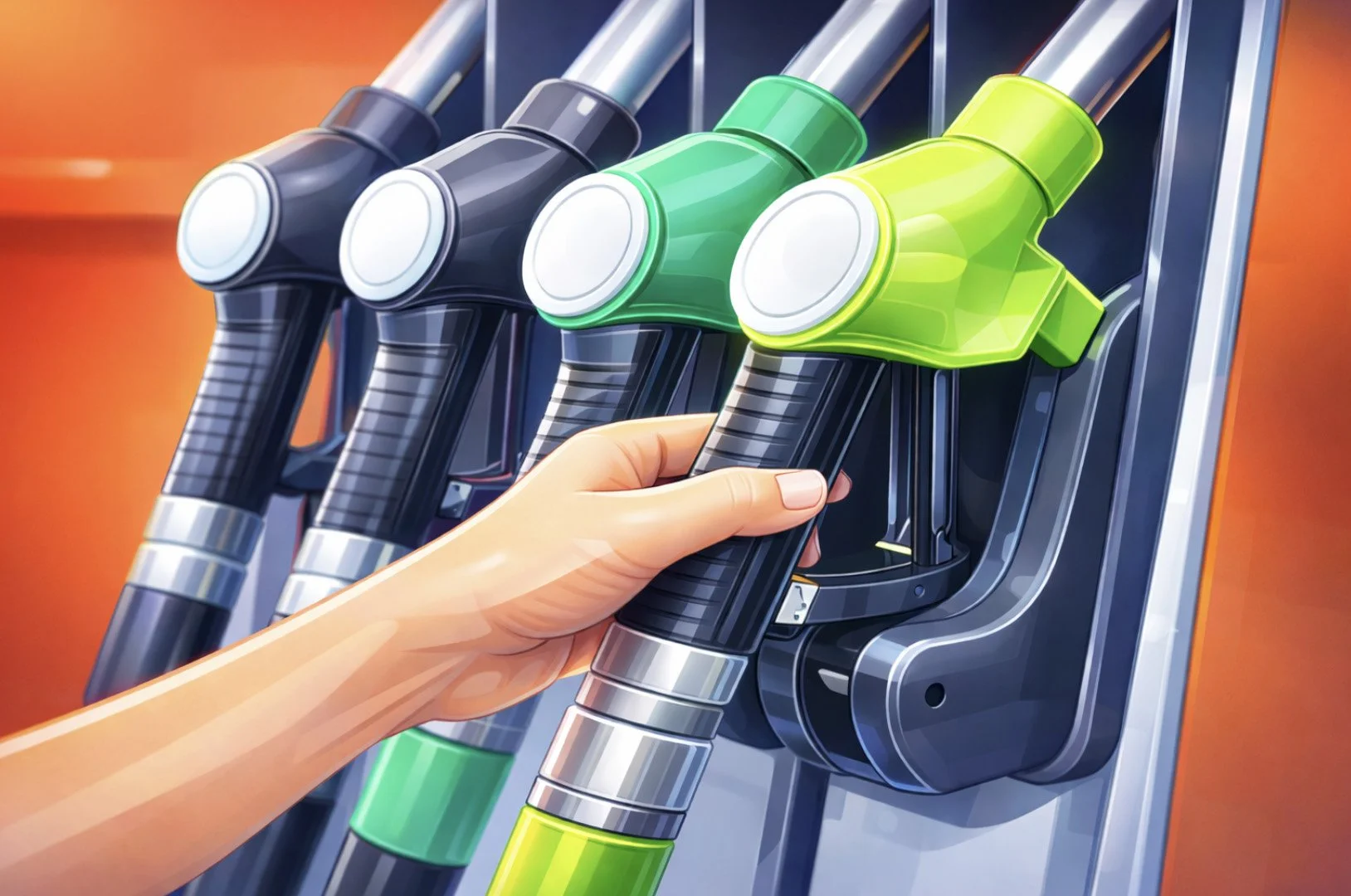
Synthetic fuels keep appearing in the same places. They show up when someone wants to rescue internal combustion from a deadline. They appear when an OEM wants to signal openness without changing its product plan. They surface when motorsport wants to prove it can stay relevant. They arrive in policy documents when aviation tries to find a route to lower emissions that still fits inside today’s aircraft and refuelling system.
Because they keep appearing as a supporting character, the market still struggles to place them. People argue about efficiency, scale, cost, and intent, then the conversation slips back into the EV debate and loses its focus.
This matters because synthetic fuels are entering a risky stage. The engineering is moving into industrial projects, the capital is serious, and the timelines are long. But the public story is still unstable, which keeps the category feeling optional. When a technology needs years of investment to mature, being treated as optional is a significant commercial problem, not a messaging quirk.
This is where synthetic fuels sit today, and it is why the story around them matters more than most people assume.
What synthetic fuels are
Synthetic fuels are liquid fuels produced using hydrogen and a carbon source, designed so the resulting molecules behave like familiar fuels. In practice, that means they can be handled through existing logistics, blended into existing streams, and used in many existing engines without rebuilding the machine around them. While this sounds mundane, it’s a huge win.
Most of the decarbonisation conversation in transport is built around new systems. New vehicles, new networks, new behaviours. Synthetic fuels are aimed at a different reality. There are systems already in place that move liquid energy around the planet, and there are machines already designed to consume it. If you can create a lower carbon liquid at scale, the deployment path is different. It runs through what already exists, rather than waiting for a full replacement cycle.
That is why aviation keeps coming up. There is no easy substitute for energy dense liquid fuels in long haul flight today, and the infrastructure around aviation fuel is already built. Policy has started to treat sustainable fuels as the most direct near and medium term tool available, then it adds specific obligations for synthetic aviation fuels on top.
The same logic is why motorsport keeps coming up. Motorsport is not a mass volume market, but it can be an hugely effective proof stage. When you fuel a field of race cars for a full season, it demonstrates reliability and repeatability. It shows that the fuel is not a lab curiosity and that performance characteristics can be managed across a demanding duty cycle.
Synthetic fuels are often described as “drop in” fuels. That phrase is true in a narrow technical sense, but it’s also a trap. It invites the category to be seen as a swap that changes nothing, when the long term opportunity is broader.
How they are made?
Synthetic fuels are an energy conversion route.
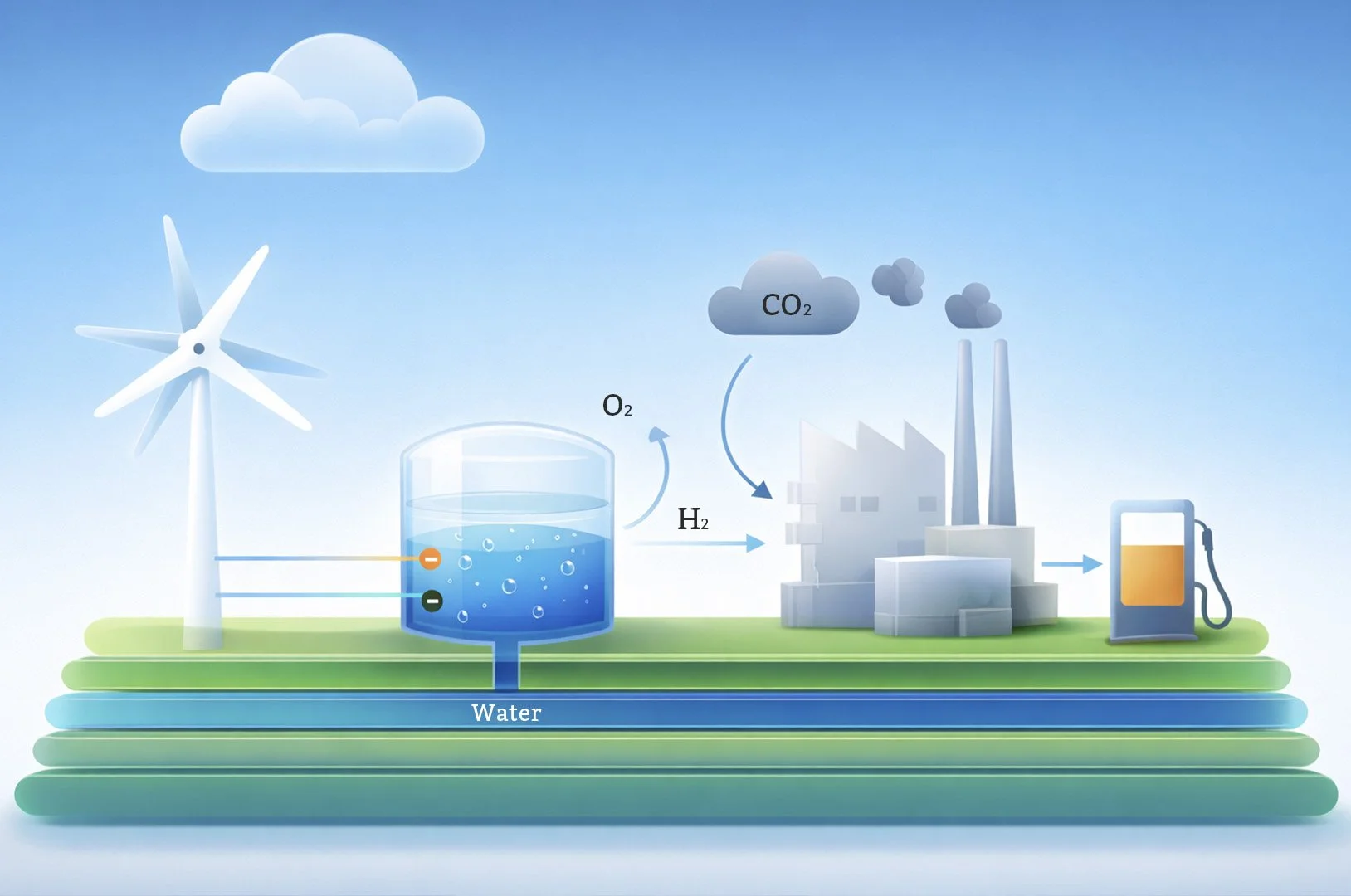
Renewable electricity is used to produce hydrogen, commonly through water electrolysis. Carbon is sourced from captured carbon dioxide, which can come from industrial streams, biogenic sources, or direct air capture. Those inputs are combined through chemical synthesis routes that produce fuels or fuel precursors, which can then be refined or blended into products that meet existing specifications.
This is where the category becomes hard to explain in public, because the manufacturing story sounds like a science lecture. The better way to describe it is to talk about constraints.
The big constraint is electricity. Renewable power availability and cost shape everything that follows, because hydrogen production is power hungry and it is the starting point for most modern synthetic fuel pathways. That is why projects cluster near low cost renewables, and why developers spend so much time talking about location.
The second constraint is carbon. Carbon is not scarce as a molecule, but it is scarce as a well defined, auditable feedstock in a world where claims matter. A fuel producer needs a carbon source that can meet regulatory definitions and certification rules. Aviation in particular is moving toward tighter accounting and eligibility, because mandates require evidence and certification.
The third constraint is scale. Early plants are expensive and limited. Many announcements are about projects, financing, and offtake, because without long term purchase agreements the economics do not work. When you see airlines committing to offtake and governments setting blending targets, what you are really watching is the creation of a demand signal strong enough to unlock capital.
When you view synthetic fuels through those constraints, you stop seeing them as a clever chemistry trick. You start seeing them as industrial infrastructure.
Where they are used today?
The early use cases tell you what the category is currently for.
Aviation is the most obvious. Both the European Union and the United Kingdom have set blending requirements for sustainable aviation fuel that rise over time, and both explicitly carve out obligations for synthetic fuels within that broader pool.
That policy creates a practical reality. Fuel suppliers and airlines need eligible volumes. Producers need contracts. Investors need confidence that the product will be purchased at a premium. The public debate about whether synthetic fuels are “efficient enough” is not the only force that matters. Mandates can turn a theoretical market into a procurement market.
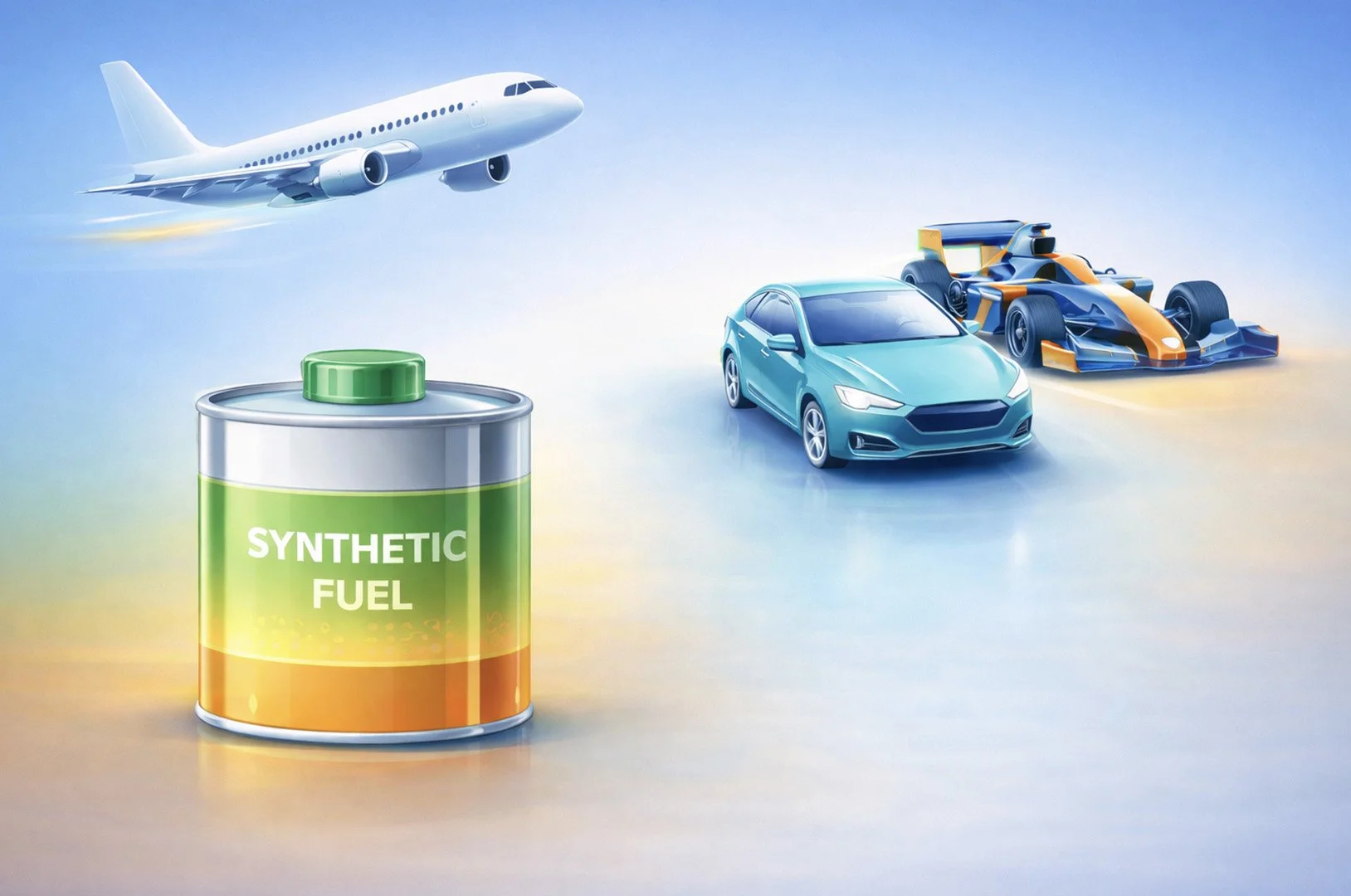
Motorsport is a different kind of use case. It sits closer to culture than compliance. Porsche’s one make series provides a clean example, where the series ran on eFuels across the season, with the raw fuel coming from the Haru Oni project and being blended into a race ready final product.
That matters because consumers rarely adopt fuel categories directly. They adopt stories. Motorsport gives the category a place where the story can be demonstrated.
Road transport use is smaller and more fragmented. It often shows up around enthusiast culture, heritage, and situations where owners want to preserve an experience without feeling they are ignoring the direction of travel. That is not mass market, but it can still be a meaningful part of the category’s identity.
This pattern is typical of new categories. The first buyers are not always the biggest buyers. They are often the buyers with the clearest reason to act.
Who is building them?
One of the fastest ways to understand whether a category is real is to look at who is spending money.
Infinium’s Project Roadrunner is a straightforward example. It is under construction in West Texas, positioned as a large scale eFuels production site intended to produce 23,000 tonnes per year of sustainable aviation fuel, with long term offtake referenced with airlines including American Airlines and IAG.
That kind of project tells you something about the stage of the industry. It is beyond concept and beyond pilot. It is in the world where capex, financing, offtake, and operations matter.
OEM involvement is also becoming more explicit, though often in measured steps. BMW’s public material on renewable fuels includes a Letter of Intent (LOI) signed in October 2025 with partners to advance renewable petrol fuels, with the intention to use eFuel for initial filling of new petrol vehicles at selected German production sites.
The significance is the signalling. When an OEM chooses to place synthetic fuel inside its official “renewable fuels” narrative, it changes how the category feels to suppliers, policymakers, and the broader market. It makes synthetic fuels look less like a fringe argument and more like an accepted part of a multi track transition logic.
This is the backdrop many people miss. The supply side is moving, even while the public story still feels unsettled.
How synthetic fuels are marketed today
Most synthetic fuel communication reads like a defence brief. Producers talk about carbon reductions, compatibility, and milestones. They announce partnerships, financing, and project phases. They speak in a language designed for investors, regulators, and industry insiders.
There is a reason for this. The category is still expensive relative to fossil alternatives, and the early market depends on mandates, incentives, and long term procurement. So the marketing goal is permission, legitimacy, and capital. It has to reassure policy stakeholders that the category can deliver real emissions savings, and it has to reassure financial stakeholders that someone will pay the premium.
The problem is what that tone creates, and the longer-term ramifications. When a category is framed primarily through justification, it inherits the mood of the argument around it. Synthetic fuels then become a talking point about whether electrification is the “right” path. They become a meme about keeping petrol alive. They become a defensive move rather than an innovation story.
This is exactly where the bottled water analogy becomes useful.
The risky stage synthetic fuels are in
Synthetic fuels are crossing the threshold where the work stops being mainly scientific and starts being mainly industrial.
This is the stage where a sector has to build plants, secure power, secure carbon supply, secure permits, and secure long term buyers. It is expensive, slow, and exposed. You cannot do it quietly, and you cannot do it cheaply. The category needs time, and time costs money.
At the same time, synthetic fuels still do not have what most mature products have. They do not yet have a broad, familiar customer base. They have early adopters, compliance driven buyers, and demonstration programmes. Those are important, but they are not the same as a market that buys routinely because it knows what it is buying.
That gap between industrial effort and market certainty is where technologies often get stuck.
The current narrative makes that gap wider. Synthetic fuels are still widely framed as a reaction. A response to political pressure, a response to criticism of EVs, a response to looming bans, a way to keep petrol alive by changing the inputs. Even when none of those things are the intention, the category keeps being pulled into that framing because the story around it is shaped by debate.
When a product is seen as a reaction, it becomes easier to dismiss. It sounds like a workaround. It sounds temporary. It sounds like something that will either be legislated away or disproved by the next price curve. That perception makes it harder to do the practical work of building a supply chain, because the people funding and buying capacity need to believe they are committing to something that will be allowed to exist for long enough to become normal.
There is also a trust risk that sits underneath everything. Synthetic fuels live on provenance. Where the electricity comes from, where the carbon comes from, how the lifecycle impact is measured, and how claims are verified. If the category is marketed with broad claims that are hard to substantiate, the backlash will not distinguish between serious projects and sloppy ones. It will simply decide the whole category feels suspect.
That is why the narrative needs to change soon. Not because the technology needs hype, but because industrial scale needs stability. The category needs a story that reduces perceived risk for the buyers and backers who have to make multi year decisions.
The next stage is where synthetic fuels either become a purchaseable category, or they remain a permanent argument with a few isolated successes. The difference is not only cost. It is whether people can understand what synthetic fuels are for, and whether they can trust what they are being sold.
Bottled water and the power of a category story
Bottled water is one of the clearest examples of a product becoming huge after it changed what it meant.
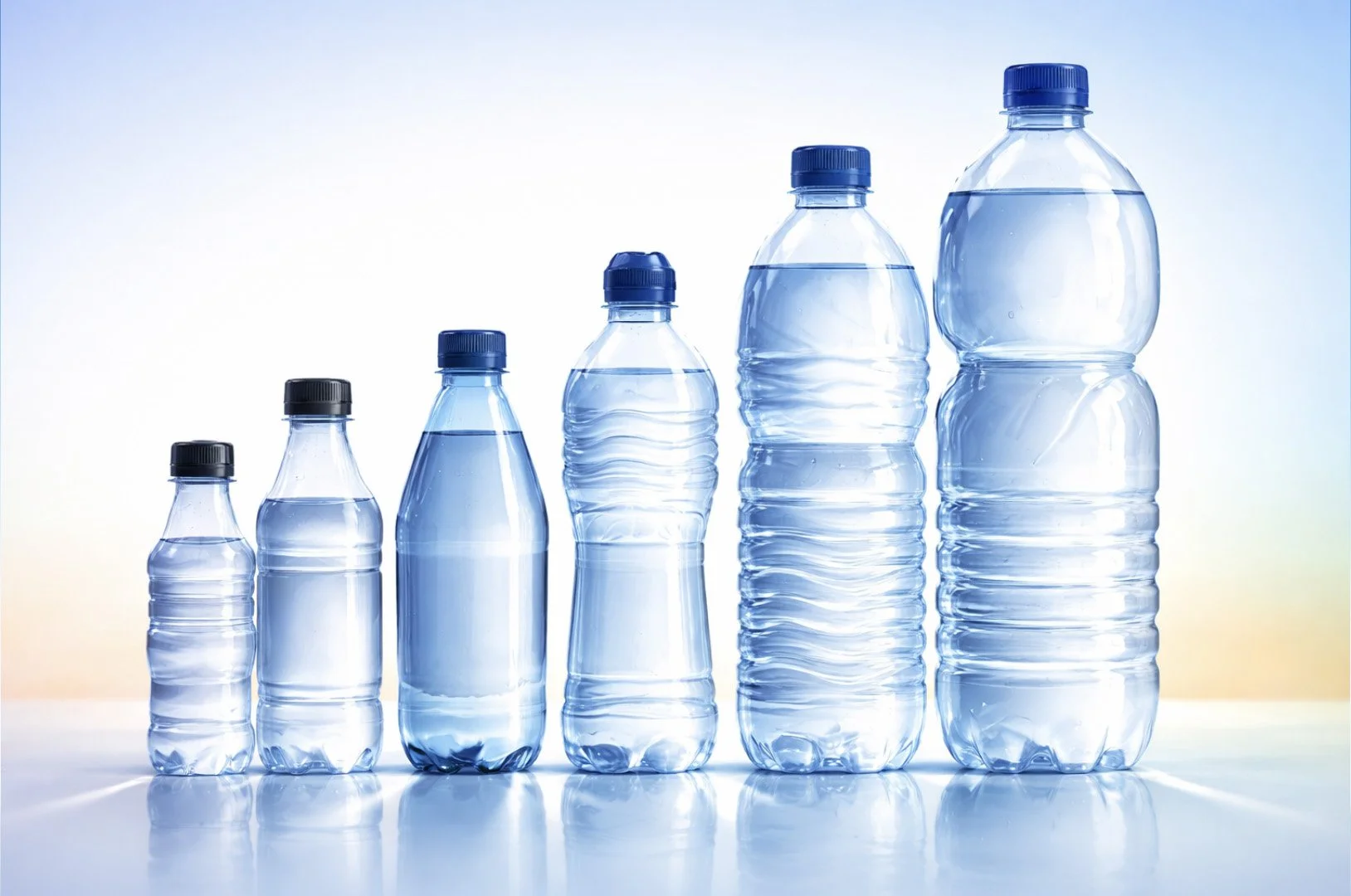
Water in a bottle is an absurd proposition if you only evaluate utility. Most people have access to water. Many people have access to safe water. But bottled water grew into a dominant packaged beverage category.
In 2024, bottled water’s total consumption volume in the United States was reported at 16.4 billion gallons, according to IBWA citing Beverage Marketing Corporation data, and it’s sitting on a long upward curve. IBWA reporting for 2023 shows 15.94 billion gallons sold and retail sales surpassing $48 billion.
So, what changed? In the late 1970s, Perrier did something very interesting. It treated bottled water as a cultural signal. The Orson Welles Perrier campaign in the United States lead to reports of sales increasing from 2.5 million bottles in 1975 to more than 75 million bottles by 1978. That story sold taste, aspiration, and identity. It barely mattered that it was talking about water.
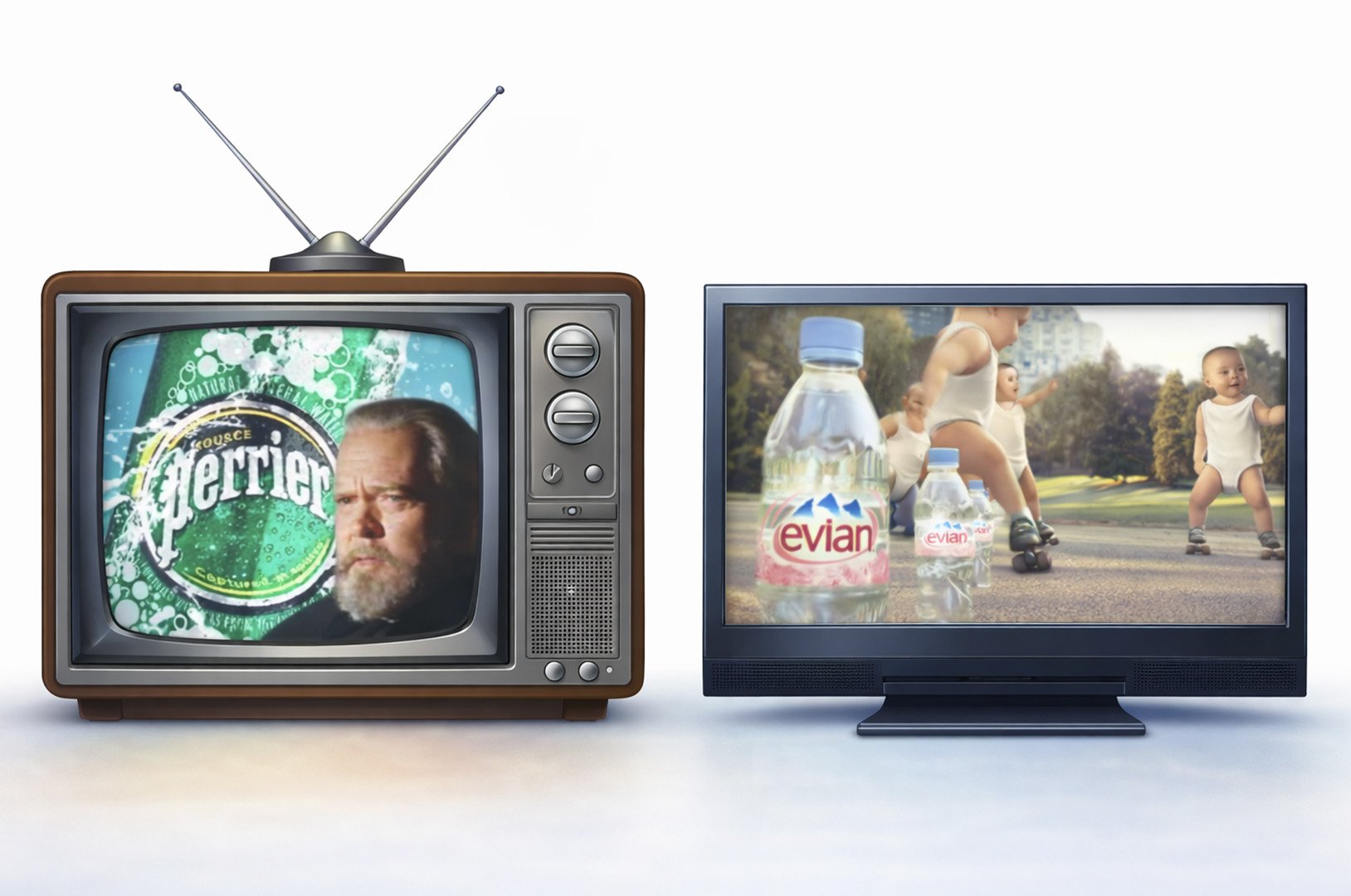
Evian later became pushed the category further into emotion and brand world building. For the “Roller Babies” campaign, Evian’s global brand director described a move away from fact-based advertising toward something designed to sell a “dream” and reinforce “Live Young.”
Danone’s reporting later highlighted the scale of attention the campaign drew and tied it to brand impact.
Over time, the category then became normalised. It stopped being a niche premium signal and became an everyday default through availability, packaging formats, and association with health and convenience. IBWA’s own framing repeatedly links bottled water’s rise to associations with healthfulness, convenience, safety, and value.
This is the lesson that matters for synthetic fuels. A category becomes big when it stops being explained as a novelty and starts being understood as a normal choice with a stable purpose. Bottled water achieved it by building meaning.
The story synthetic fuels need
If synthetic fuels are to scale beyond specialist and compliance driven niches, they need a category story that holds even when you remove the EV debate.
That story starts with an honest definition. Synthetic fuels are a way to convert renewable electricity into liquid energy that can be stored, shipped, and used in existing machines. That is a different story from “saving petrol.” It is also a different story from “fighting electrification.” It is a story about energy systems, industrial capability, and compatibility.
Once you frame it that way, you can position synthetic fuels as an innovation route with a clear reason to exist. Aviation provides one reason. The EU’s ReFuelEU regulation sets increasing SAF blending requirements and includes a specific synthetic fuels share rising to 1.2 percent by 2030 and 35 percent by 2050. The UK’s SAF mandate similarly includes a power to liquid obligation, introduced from 2028, rising to 3.5 percent by 2040. Those policy targets act like scaffolding for a new category. They provide a reason for producers to build, a reason for buyers to contract, and a reason for the market to define standards.
Motorsport provides a different reason. It can demonstrate that the category functions in conditions where excuses do not survive. Porsche’s Supercup season provides a clean case study of the category being used across events, across cars, across a season.
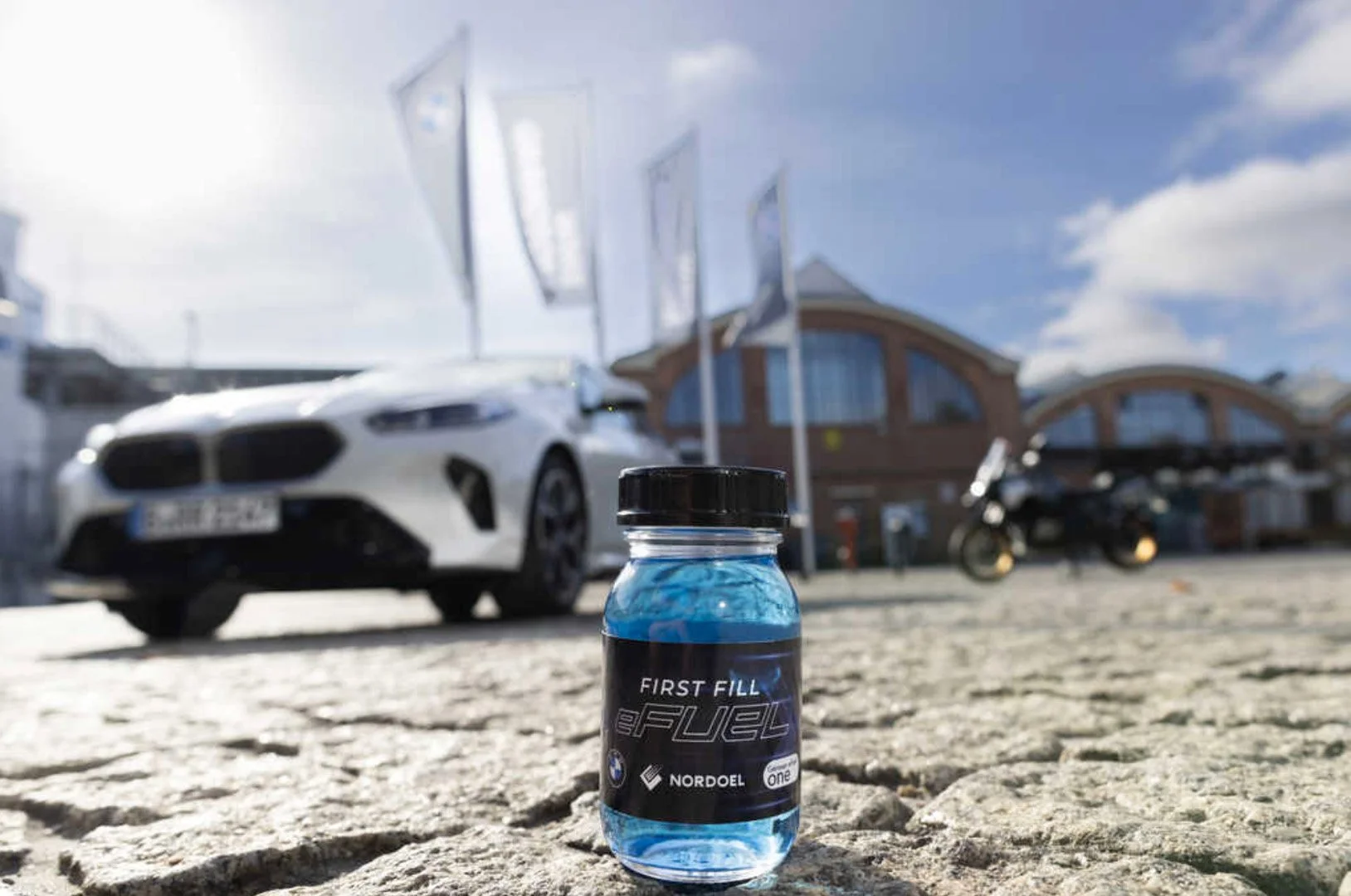
OEM actions give us a third reason. BMW’s October 2025 LOI and stated intention to use eFuel for initial filling in selected sites gives a real world example of an OEM placing synthetic fuels inside its own operational narrative, not just a press conference.
These are building blocks for a category story. But a category story needs something more important.
It needs a future.
What synthetic fuels could become
It is tempting to treat synthetic fuels as a tactical tool. A compliance route for aviation. A proof point for motorsport. A comfort blanket for enthusiasts. That view keeps the category small, because it defines it by the problem it is reacting to.
A more useful way to think is to ask what the category could become if it grows up. Synthetic fuels could become a verified, tradeable class of low carbon liquid fuels with transparent provenance. That might sound abstract, but the direction already exists inside regulation. Both the EU and the UK talk about eligibility, certificates, and evidence. That is the language of traceability.
In a mature market, buyers want specifications. They want to know what they are purchasing, how it is measured, and how it compares. If synthetic fuels develop auditable grades, with consistent carbon intensity definitions, they become easier to buy. Procurement teams can specify them. Supply chains can plan around them. Brands can make claims that are defensible.
This is where marketing matters, in a very grounded way. Marketing is the bridge between a technical product and a purchaseable category. Marketing can make provenance visible, makes certification understandable, and shifts the audience away from political tribalism and toward practical adoption.
Synthetic fuels could also become part of an energy resilience story.
Renewable electricity production is not perfectly aligned with demand. There are times when power is curtailed because the grid cannot absorb it. There are locations where renewables are abundant and electricity is cheap, while demand is elsewhere. Converting renewable power into a transportable liquid energy carrier creates a different kind of flexibility. It allows energy to be stored and moved through existing infrastructure.
That is bigger than automotive, but it still touches automotive because automotive sits at an intersection of energy, industry, and culture. A category story that frames synthetic fuels as an industrial method for moving renewable energy, rather than a niche automotive loophole, gives the category room to grow.
Synthetic fuels could also become a premium performance and heritage product with cultural meaning. This is where motorsport and specialist builders matter. They can make the category emotionally credible, the same way bottled water brands made water socially meaningful. Motorsport demonstrates that the fuel works. Heritage and specialist markets demonstrate that the fuel can be part of a modern ownership experience rather than a guilty one.
The category does not need to pretend it solves everything. It needs to be clear about what it is for.
What OEMs should do with this story
OEMs set the tone. If they treat synthetic fuels as a side note, everyone else does too. The opportunity is to place synthetic fuels inside a clear transition narrative that stands on its own, focused on legacy fleet impact, compatibility, and where supply is realistically headed. Motorsport then becomes proof, used to show repeatable performance and reliability rather than a symbolic sustainability gesture.
What suppliers should do with this story
Suppliers make adoption feel safe. Buyers worry about durability, compatibility, emissions performance, and warranty risk. The most useful move is to publish what you have tested, where the boundaries are, and what conditions need to be true for the fuel to work as promised. That turns synthetic fuels from an idea into something procurement and engineering teams can plan around.
What motorsport, restomods, and specialist garages should do
This is where the category becomes real in public. Motorsport proves repeatability when it runs across a season, not a one off demo. Specialist builders can treat synthetic fuels as part of modern craft, a way to keep mechanical culture alive while the energy system changes around it.
Marketing cannot change the cost curve, but it can change the confidence curve
Synthetic fuels have real constraints. Cost, supply, and energy inputs are not solved by communication, and adoption is rarely blocked just by economics. It is blocked by confidence.

Confidence comes from clarity, from visible proof, and from trust markers that feel stable. That’s why bottled water’s story matters. A category that once seemed beyond irrational became normal in less than 2 years. Synthetic fuels need the same category work. They need a clear definition that is bigger than an argument, and proof points that people can reference, such as aviation flights using certified synthetic kerosene blends and motorsport seasons running on eFuels.
They need a language of provenance that reduces the fear of greenwashing. They need honest boundaries that stop exaggerated claims from becoming the story. That’s what marketing needs to deliver.
Conclusion
Synthetic fuels will stay at risk for as long as they are treated as a reaction. Until we start to describe them as what they are in practical terms: a way to turn renewable electricity into liquid energy that can move through existing systems. This matters now, because the category is entering the stage where the spend is real and the lead times are long. Plants, power contracts, certification, logistics, and offtake agreements all require decisions that are difficult to reverse. If synthetic fuels are still widely framed as a political talking point while the industry is trying to scale supply, the category remains fragile even when production grows.
Bottled water became huge when it stopped being water in a bottle and became a normal choice with meaning. Synthetic fuels have their own version of that journey available. The technology is moving, the demand signals are forming, and early proof exists. The narrative can catch up, and it needs to, because confidence is part of what gives an expensive new category the breathing room to mature. To continue to exist.
Before the story gets written for you…
Synthetic fuels have a story problem.
If you are an OEM, a supplier, or a synthetic fuels producer trying to decide how to speak about this work without being pulled into the EV debate or partisan framing, we can help. Six Lines supports technical teams who need to turn complex innovation into a clear commercial story, then translate that story into the decisions, content, and outreach that move markets.
For synthetic fuels in particular, the story matters because it helps create the stability the category needs to mature. A clearer narrative builds confidence with partners, investors, policymakers, and early buyers, and that confidence buys you time for supply to scale and standards to settle.
If you want to pressure test your narrative and build messaging that buys your time, send us a note, as we’ve barely scratched the surface today.