Car Dealers: How classic car dealers turn credibility into profit

Six Lines - Classic Car Marketing Support
Classic car buyers rarely struggle to decide what model they like. By the time they speak to a dealer, buyers already know the car, have read the history, followed auction results, joined owner groups, and formed strong opinions.
What they are deciding is whether they can justify this car.
That distinction matters. Most classic car marketing still sells the idea of the model, but buyers are weighing condition, provenance, correctness, known issues, how much they trust the business selling it and whether this car speaks to them. When marketing stays at model level, buyers are left to do the hardest part of the work themselves. And when buyers have to fill in gaps, hesitation follows, browsing continues, and the dealer whose messaging is doing the heavy lifting for them, gets the sale.
Getting this right is hugely important, as buyer hesitation is not neutral. It ties up capital, weakens margins, and quietly erodes the value of both stock and brand.
Why model level marketing quietly undermines value
Many classic car listings are technically sound. Photography is strong. Specifications are accurate. The basics are covered.
What is often missing is explanation.
Model descriptions describe what the car should be, not what this particular car actually represents. Service history is listed but not interpreted. Condition is stated but not contextualised. Prior work is mentioned without helping the buyer understand its quality or relevance.
The result is predictable. Buyers ask themselves how this car compares to others they have seen? What might bite them? What ownership is likely to involve? What have they missed? If those questions are not answered clearly, buyers slow down, negotiate harder, or keep looking. Unfortunately, over time, even excellent cars start to feel interchangeable.
Great digital merchandising explains this car
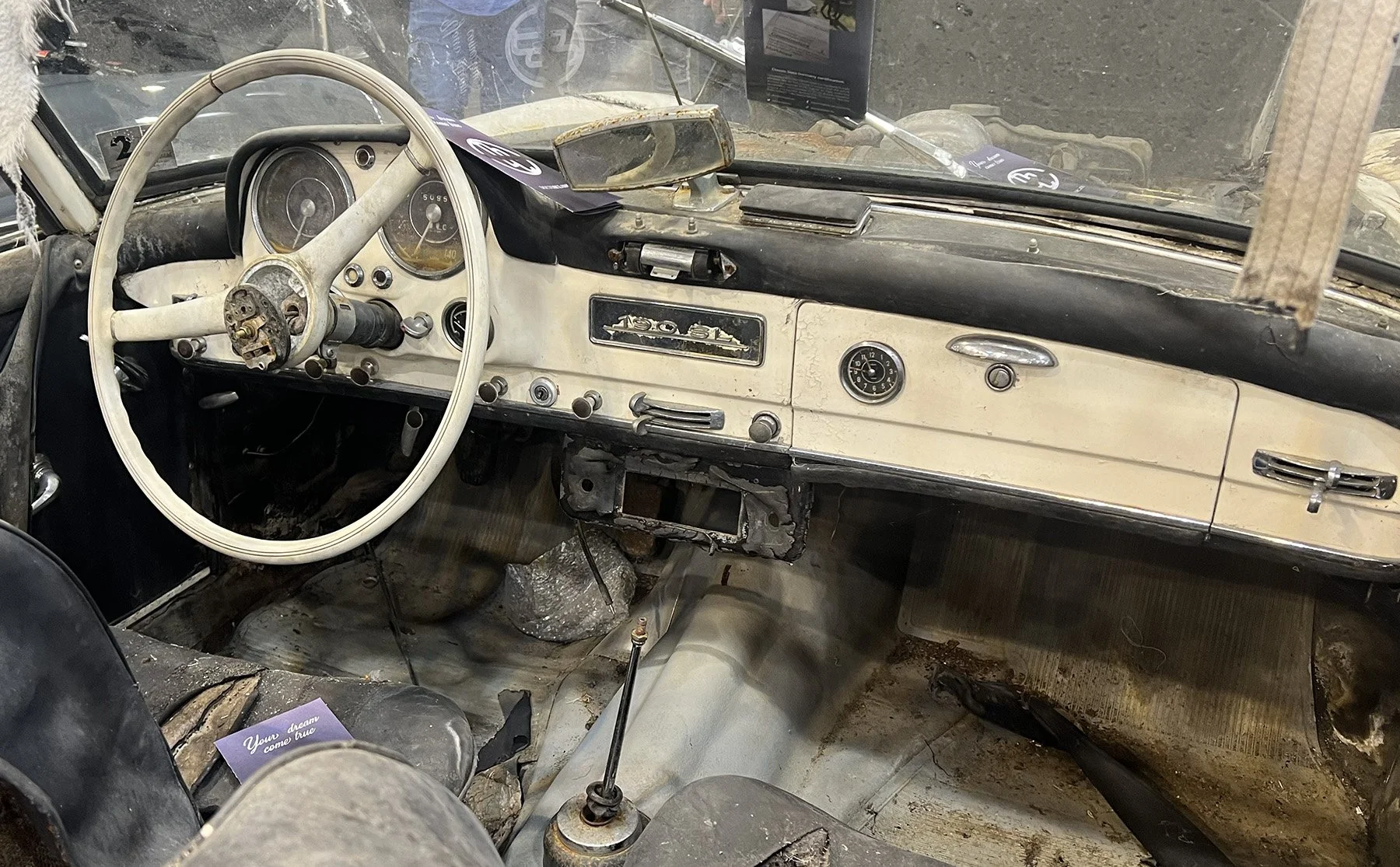
A car’s condition is only a weak point if you don’t explain it.
Strong classic car dealer marketing treats each car as a product in its own right.
That means explaining why the car exists in its current state. What work has been done, when, and why. What has been preserved deliberately, what has been improved carefully, and where judgement has been applied.
Buyers want to understand why this example makes sense in the context of the wider market. Clear digital merchandising reduces uncertainty and makes the decision easier to defend, both internally and to others.
For classic car restorers selling their own builds, this matters even more. When you are both builder and seller, explanation becomes proof. The quality of your communication stands in for distance and reputation.
Why classic car digital merchandising is different to new cars
Classic car buyers behave very differently to new car buyers.
With new cars, buyers rely on manufacturer specifications, warranties, and dealer networks. With classics, value sits in knowledge, judgement, and trust. Service history matters more than mileage. Ownership knowledge matters more than option lists. Dealer understanding of known weak points matters more than headline performance figures.
Rust traps, engine revisions, cooling issues, gearbox behaviour, parts availability, and originality are all part of the decision. Strong digital merchandising reflects that reality. It does not pretend the car is perfect. It explains what is known, what has been addressed, and what ownership is likely to involve.
Buyers read this as competence, not risk.
Practical tips for marketing classic cars online
In practice, most of the impact comes from a handful of choices about what you explain, and how you explain it.
5 tips for clearer classic car dealer marketing
Treat service history as a story, not a list. Explain why key work was done and what it means for future ownership.
Acknowledge known weak points. Explain how they have been inspected, repaired, or managed. Why? Because silence creates suspicion, and potential buyers will fill in the blanks themselves, with the worst possible option.
Separate originality from correctness. Be clear about what is original, what has been replaced, and why that was the right decision, why it is best practice.
Use photography to show care, not just shine. Undersides, engine bays, details, and known problem areas matter.
Write listings so buyers can repeat your words to someone else. If they can explain the car confidently, you have done your job.
Remember the old saying “don’t buy the car, buy the seller”. Flip that around… what are you doing to sell yourself?
Interaction reinforces the decision
How a dealer communicates matters as much as how a car is presented.
Emails, phone calls, and follow ups all signal how the business operates. Clear answers build confidence. Calm explanation reduces friction. Vague reassurance creates doubt. A well explained car paired with rushed or unclear communication creates tension. When both are aligned, buyers feel safer committing. This is particularly important for higher value cars where professionalism is expected rather than pressure.
Why newsletters and insight content build credibility
Some of the strongest classic dealers quietly publish regular updates. These are not sales emails. They are signals of judgement.
Market commentary, recent sales, interesting cars, and ownership observations show that the dealer understands the wider market, not just their current stock. Over time, this builds credibility. Buyers start to trust the source, not just the listing.
When that trust exists, individual cars become easier to believe in and easier to buy.
Which classic car dealers are doing this well?
Dealers who explain cars clearly tend to feel easier to buy from. Classicmobilia, based in Milton Keynes, is a good example of a business that attracts buyers by presenting rare and significant cars with context and care. They tell the story of the individual car, so their stock feels curated, and lean on the expertise of their staff to help potential buyers trust them quickly.
At a national level, Hexagon are often great at this. Look at one of their vehicle descriptions and count the number of times they use the words “this”, “our” and “your”. Try to beat that number when you’re writing your next ad.
Standing out in a crowded classic market

The classic market is increasingly well presented. Many dealers have strong photography and polished websites. Visual quality alone no longer differentiates.
What does differentiate is clarity. Helping buyers understand provenance, correctness, ownership reality, and decision trade offs. Websites that rely on galleries alone tend to feel interchangeable. Those that explain decisions and process tend to feel safer, even at a premium.
Clarity reduces perceived risk. Reduced risk supports value.
Why this extra effort benefits you
When explanation becomes part of how you sell, stock moves with less friction. Negotiations soften, buyer confidence improves, and over time, your brand becomes associated with knowledge, honesty and credibility.
This affects more than individual sales. It changes how the business itself is perceived. For dealers thinking about growth, succession, or exit, credibility compounds in the background and raises both the value and effectiveness of your business.
Questions we often hear from classic dealers
-
Yes! Serious buyers use detail to reduce risk. Less serious buyers will self-select out, which saves you time and both of you money.
-
Honestly, it’s usually the opposite. Genuine explanation builds trust. Silence creates doubt. -
The technical answer is “often enough to stay present, not so often that it feels forced” as consistency matters more than frequency.
But that’s not a very helpful. The quick answer is probably aim for once a month.
-
Absolutely not! Any transaction where confidence affects price and speed of sale will benefit from better explanations.
-
More so! If you build the car, clear explanation and communication protects your value. You need to sell your expertise as much as the car here!
Where Six Lines fits
Six Lines works with classic car dealers and restorers who already have strong stock, but know that how their cars are explained and presented is doing less commercial work than it could.
In practice, support usually starts in one of three ways.
A focused review of how your individual cars are currently being presented online.
Listings, photography, structure, and messaging are assessed through the lens of buyer decision making rather than aesthetics alone. The aim is to identify where confidence is being lost, not where effort is missing.
Clearer product and brand messaging.
This means helping dealers explain specific cars properly, not rewriting model descriptions. Service history, prior work, known issues, and ownership reality are reframed so buyers can understand and repeat the story with confidence.
Ongoing content and brand support.
This often includes simple newsletters or updates that demonstrate market awareness, judgement, and consistency. Not sales emails, but credibility building content that makes the business feel worth listening to over time.
The aim is not louder marketing. It is calmer, clearer communication that reduces hesitation, protects value, and makes decisions easier.
If you agree with this, we should probably chat…
This article is part of Perspectives, our series of practical views on automotive marketing problems.