Ferrari’s making an EV: Let’s all take a deep breath
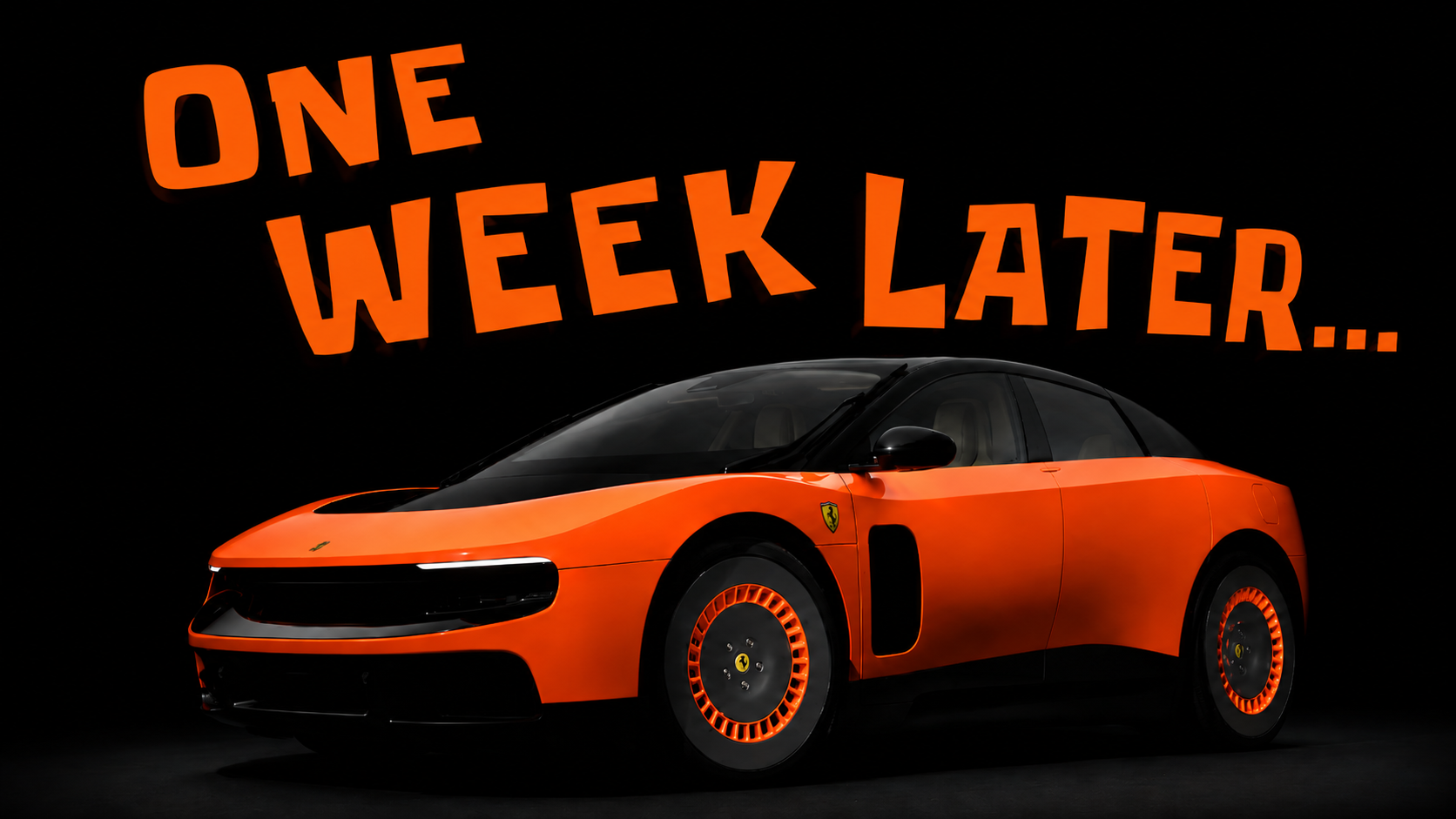
OK, breathe in…
It has now been a week since the Luce arrived with the sort of reaction only Ferrari seems to generate. An electric car from any other manufacturer would be judged on range, charging speed, performance, price and whether the interior feels expensive enough. An electric Ferrari is judged against childhood posters, racing history, V12 thrums, resale anxiety, whether everyone involved in the marketing is a genius (or the opposite), and the rotational speed of Enzo Ferrari in his grave. This was always going to be a weird week on LinkedIn.
The headlines are easy to write because the story contains all the useful ingredients. Ferrari has revealed its first fully electric car. It has four doors, five seats, a large battery, four electric motors and a design shaped with LoveFrom, the group led by the Wallabee-clad former Apple design chief Jony Ive and his best friend, industrial design icon Marc Newson.
Some people think it doesn’t look enough like a Ferrari. Some think it looks too much like a SMEG fridge. Ferrari’s shares fell after the reveal, with Reuters reporting an 8.4 percent fall in Milan and a 5.1 percent fall in New York, which gave the launch an immediate commercial sting as well as an enthusiast one.
That makes the Luce an easy target, but perhaps the wrong one. Obviously not every Ferrari fan wants a five seat electric GT, but the more useful point is whether this car harms the parts of Ferrari people already care about, or whether it creates a separate place for Ferrari to explore electrification without forcing its existing sports cars to carry that burden.
“It doesn’t even look like a Ferrari”
Remember what the Luce is, and what it hasn’t replaced. It hasn’t replaced a mid-engined Ferrari. It hasn’t replaced the front-engined GTs. It hasn’t even replaced the Purosangue. It isn’t pretending it still has an engine behind the seats. For petrol-heads, this is great news, because the most obvious electric Ferrari might actually have been the more dangerous one.
Imagine, for a moment, the obvious EV Ferrari. A two-door electric supercar, shaped like a traditional mid-engined Ferrari, with dramatic aero, a low stance, a huge power figure and enough familiar visual cues to calm the first wave of complaints. It would have looked more like the sort of Ferrari the internet had prepared itself to accept, and it would have landed straight in the middle of the most sensitive part of the brand.
The problem with an electric car pretending to be the new core Ferrari sports car is that it would invite a direct comparison with the cars that still define the company emotionally. It’d raise questions that Ferrari needs to avoid right now. Is this the future of the 296 line? Is this where the next generation of mid-engined Ferrari is heading? Does the electric car make the combustion car feel outdated? Does the combustion car make the electric car feel overweight? None of those comparisons help Ferrari, and none of them would give their EV breathing room to succeed on its own terms.
The Luce lets Ferrari avoid that fight. It sits somewhere new in the range, giving Ferrari a cleaner separation between its established emotional products and its first serious electric product. Obviously you don’t have to like, but you don’t really need to. It certainly doesn’t mean the design is beyond criticism, but you don’t have to buy one. A large electric Ferrari with four doors was always going to annoy people before anyone had even seen the wheels. But as a product decision, it makes sense to give the electric Ferrari a different role in the range, rather than force it to compete with the cars that still define Ferrari for many buyers (and sometimes define them too).
The Purosangue makes this point even more clearly. Some people still dislike the idea of a four door, SUV-but-please-don’t-call-it-one Ferrari… but it has a naturally aspirated 6.5 litre V12 derived from the Enzo, which in 2026 is amazing. The Luce doesn’t replace that either. It doesn’t make the Purosangue redundant, and it doesn’t stop Ferrari selling something gloriously unreasonable to people who want a modern Ferrari with a screaming twelve cylinder.
This is why the car fan’s response needs a little patience. The Luce may not feel like the Ferrari many enthusiasts had imagined, but it also leaves the Ferraris they already like alone. It gives Ferrari two personalities rather than asking one to absorb everything. One can stay emotional, mechanical and theatrical. The other can be quiet, fast, luxury-led and more experimental. That split may make some people uncomfortable, but it may also be the thing that lets the old Ferrari continue for longer than it otherwise could. Maybe next year they’ll announce another EV, maybe as a Dino, maybe not. For now, this car protects the Ferrari you do like.
As a business, this is an extra Ferrari rather than a replacement Ferrari
The commercial case for the Luce isn’t built on pleasing every traditional Ferrari enthusiast. If you dream of a manual 355, or of one day straight-piping an F12, or if you’ve just bought a 12Cilindri in Verde British Racing, firstly, good on you! Secondly, you’re not expected to look at a five seat EV and feel personally comforted by it. That asks too much of the car and too much of you.
The aim is to see if Ferrari customers, regular or first-time, can find a role for it. A new car to buy. Something different for the collection. Another car to use during the week. A reason to stay inside the Ferrari ecosystem when their daily needs might currently send them towards a luxury EV from a German or British (but statistically German-owned) OEM.
For existing customers, it may simply become the next Ferrari in the garage. For collectors, it has the obvious pull of being the first electric Ferrari. For speculators, scarcity and allocation have their own strange water divining. For customers hoping to strengthen their relationship with the brand, buying the unfamiliar model can be part of the game. For others, it may be the first electric luxury car with enough badge strength to feel worth the money.
Ferrari’s task, then, becomes much easier than replacing the emotional centre of the range. It has to give the business a credible electric product, create another reason for certain customers to spend money with Ferrari, and let Maranello learn about electric luxury at Ferrari prices, with control over supply and control over who gets one.
We also don’t yet know the production strategy, which makes some of the early verdicts feel a little too eager. We don’t know how many Ferrari wants to build. We don’t know how much of the volume will go to existing customers. We don’t know whether Ferrari sees the Luce primarily as a customer retention product, a conquest product, a technology bridge, a regulatory hedge, a design experiment, a compliance solution, or (likely) some combination of all those things. Without that context, calling the car a failure feels like judging a race strategy after hearing one pre-race interview.
Apple casts a big shadow
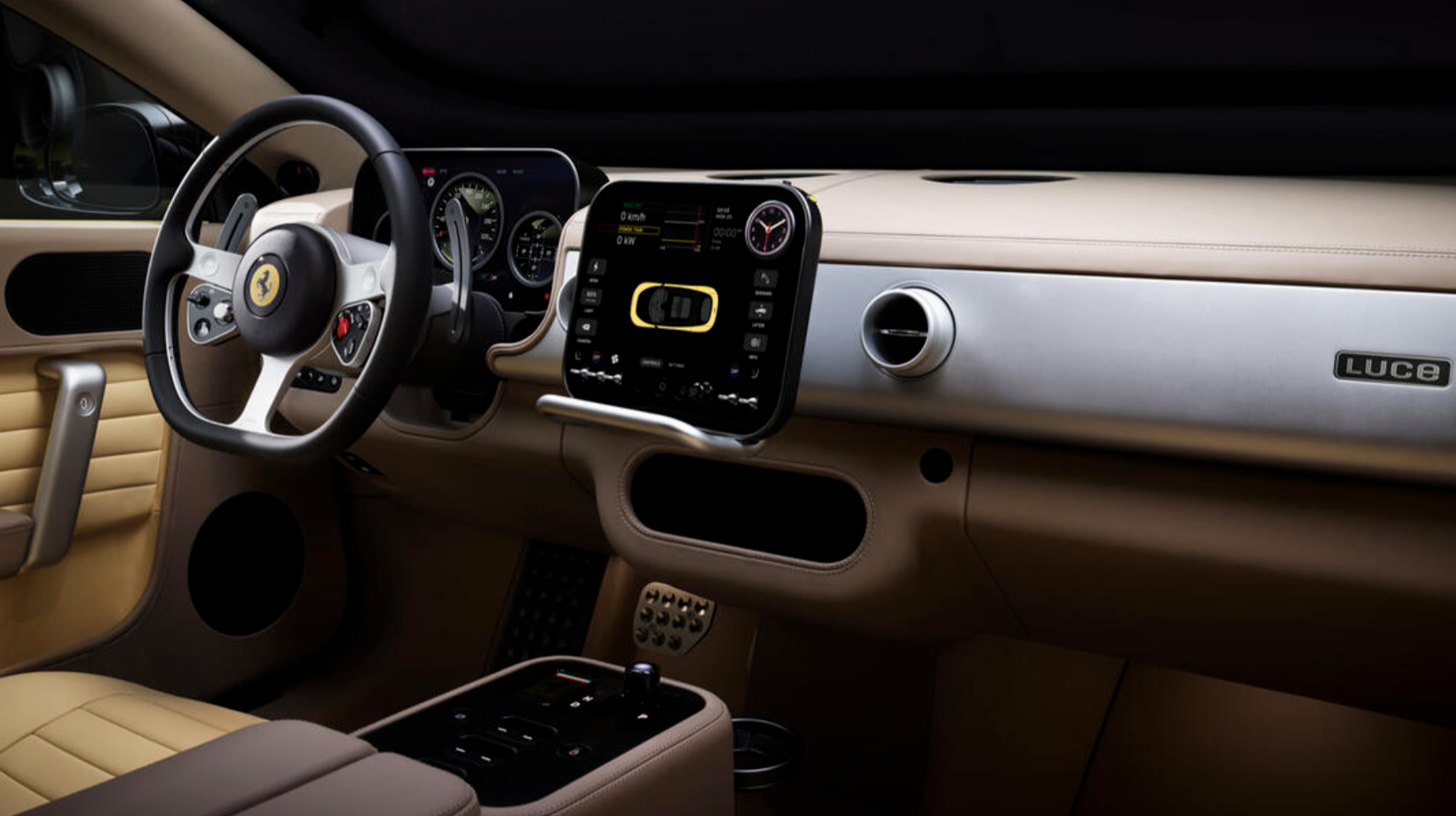
The LoveFrom element adds another interesting layer. Jony Ive and Marc Newson bring a very specific kind of cultural weight to the project, and Ferrari has clearly chosen to frame its first EV through design, tactility and luxury experience. Reports on the Luce interior describe a move away from the large screen-first thinking that has swallowed so many modern cabins, with more emphasis on physical controls, aluminium, glass, switches and dials.
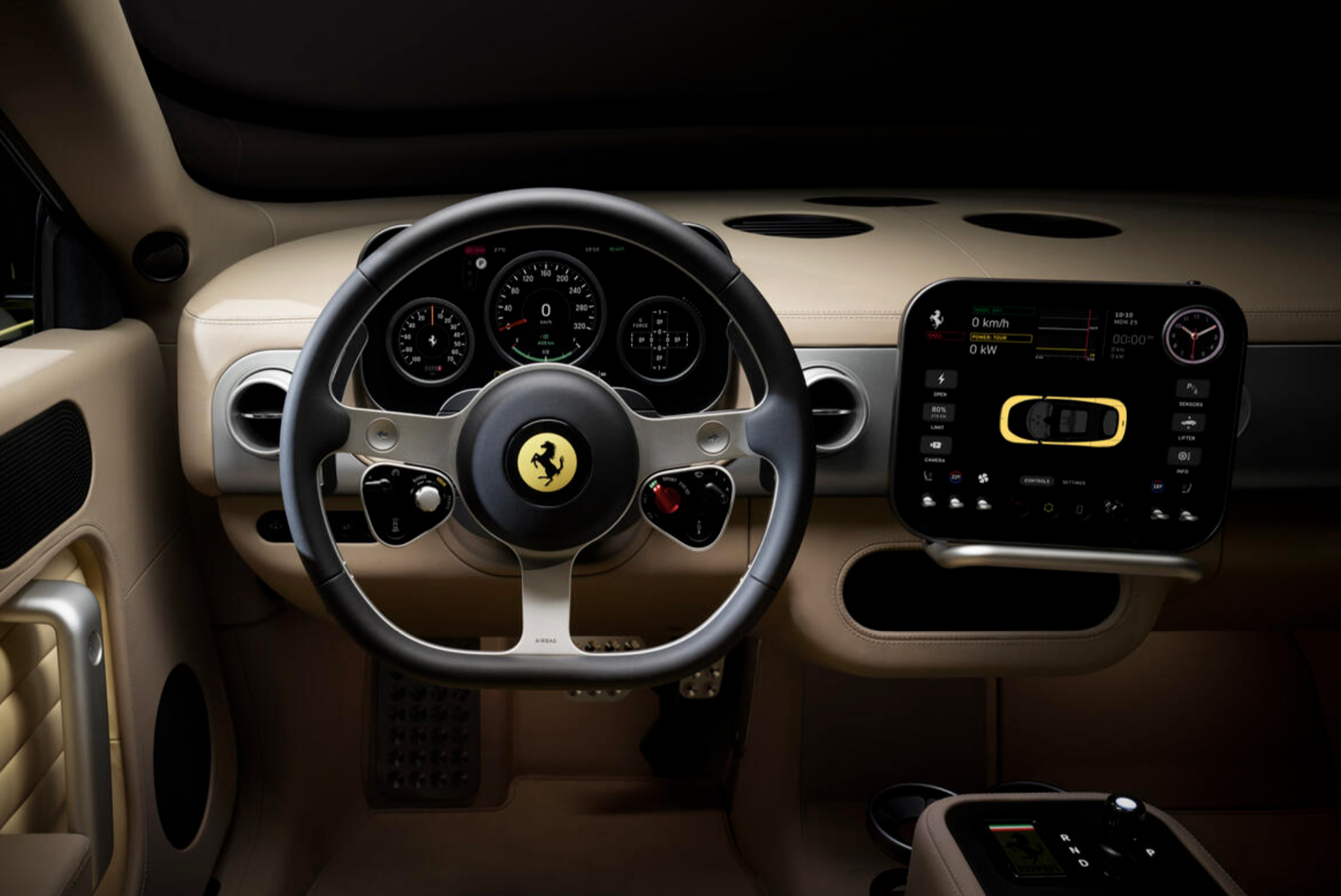
The car industry spent much of the last decade learning the least helpful lessons from the iPhone. We saw the screen and missed the discipline behind the product. We started talking about the ‘Smartphone on wheels”. This led to cabins where simple actions were pushed into flat menus and the driver was asked to behave like a distracted app-user while travelling at speed. If Ferrari and LoveFrom are trying to move the luxury EV cabin back towards physical interaction, material quality and controls that can be used by feel, that deserves more serious attention than the first round of design memes suggests.
Apple spent years (and $billions) working on its rumoured car, Project Titan, before Reuters reported in 2024 that the programme had been cancelled. The Luce is not the Apple Car, but that association still has commercial value. For some buyers, a Ferrari shaped by the people linked to Apple’s strongest design era will carry its own appeal. “The Apple Car, built by Ferrari” may sound glib, but it’s a useful way to understand why this car may reach people who aren’t just measuring it against a 458 Speciale or a 250 SWB.
We don’t know what success looks like yet
The most premature criticism is that the Luce has already failed as marketing. A quick scroll through LinkedIn is fairly brutal right now. It may well prove to have been mishandled, but we need to know what Ferrari was trying to achieve before we can even begin to say it has failed.
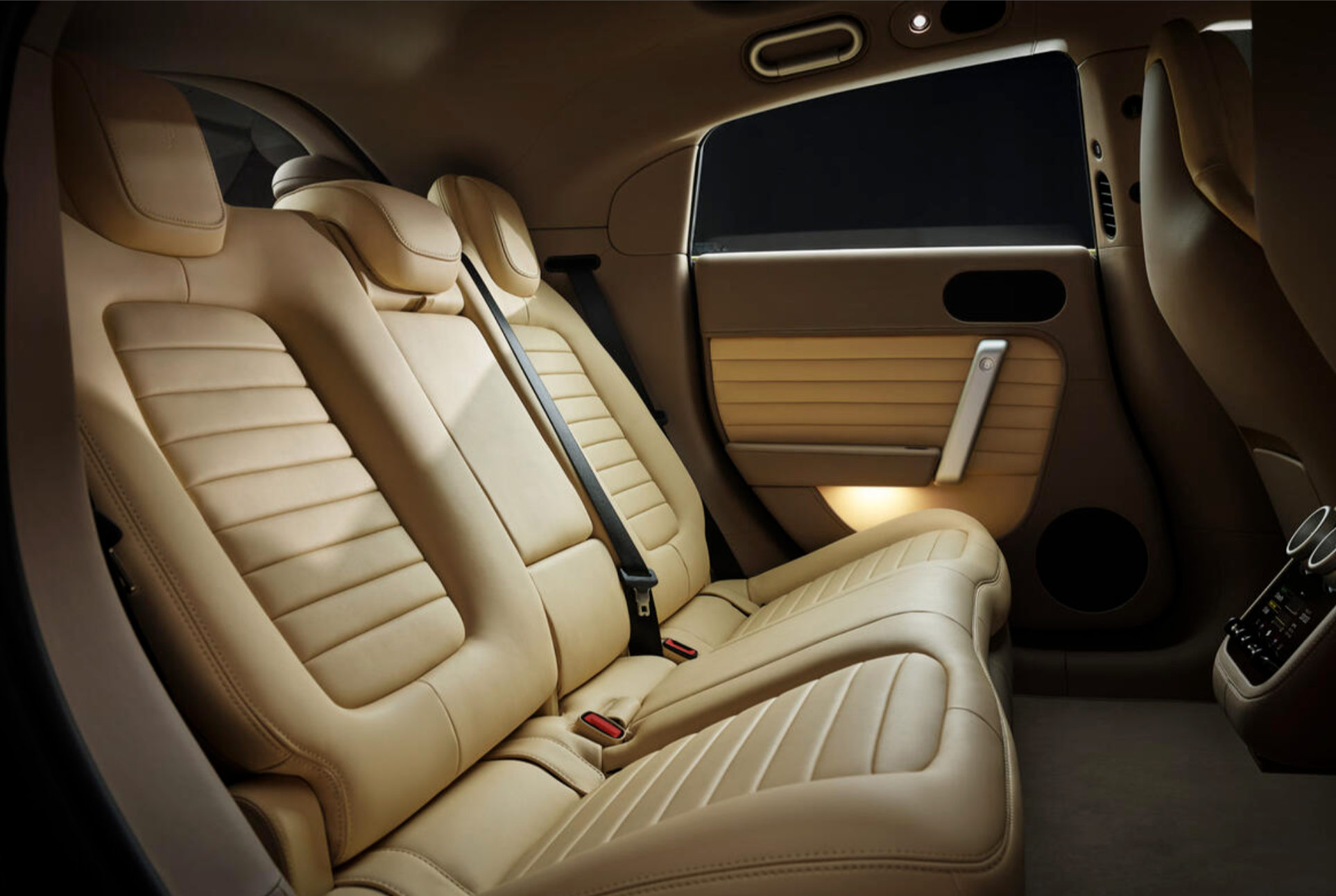
If the goal was to make every Ferrari purist immediately comfortable with a five seat EV, then yes, bad idea. But that is very unlikely to have been the goal. Ferrari may be using the Luce to give its range an electric anchor while preserving the emotional logic of the combustion and hybrid cars around it. It may be using the car to test new interior ideas, new customer behaviours, new ownership patterns and a different version of Ferrari luxury. It may be using the project to show regulators, investors and future customers that it has an EV path without turning the entire business into an EV story.
That is an important difference. Ferrari needs it to make electrification possible without making the rest of the range look like it is waiting to be replaced. From a marketing point-of-view, that is a more subtle job than the launch week noise allows for.
The criticism itself also tells us something useful. People are saying it is unworthy of being a Ferrari. That is a complaint, but it also shows the height of the pedestal Ferrari still manages to occupy in 2026. The brand is being judged against an almost impossible standard because people still believe it should be held to one. For most car companies, indifference is the real danger. Ferrari has the opposite problem. It makes something new and the world behaves as though a small part of civilisation has been put at risk. That may feel uncomfortable for Ferrari in the short term, but it is not a bad problem to have.
The world is watching
The launch has ensured that every serious luxury, EV and automotive design team is watching. They will be looking at the customer reaction, the allocation strategy, the cabin design, the physical controls, the way Ferrari explains electric performance and the way LoveFrom’s consumer product thinking translates into a car. Some will decide Ferrari has gone too far and view it as a cautionary tale, like watching someone else cross that bridge in Squid Game. Some will quietly borrow the better ideas. The move back towards tactility alone is likely to be studied closely, because a lot of manufacturers know their interiors have become too screen dependent but have not yet found a confident way back to physical solutions.
And most of us will hardly ever see one. That is worth remembering before we all grow too firm in our opinions. I’ll probably see fewer than Sixty Luces (Luci? Lucy? Luciuses?) in person in my lifetime, and I spend a lot of time at car shows. It looks fine in pictures, and it probably looks better in the metal, where size, surface, stance, presence, smell (yes) and interior detail can do work that launch photography often flattens. Or it may still look odd. That is allowed. Plenty of interesting cars look odd before they start to make sense. Mine did.
The stronger point is that Ferrari will benefit from having made it. The Luce gives Maranello a controlled way into a market it could not avoid any longer, and the clock was ticking loudly. It gives some of their customers another reason to stay close to the brand, and others another reason to keep their ICE Ferraris in the garage rather than putting them onto the used market. It gives the company a high-value test bed for electric performance, interior thinking and customer expectation. Most importantly, it gives the rest of the range some breathing space, because the EV responsibility now has somewhere to sit.
That may be the part worth judging most carefully. The Luce doesn’t need to become your favourite Ferrari. It needs to give Maranello a credible electric car, while giving the rest of the range more room to keep being Ferrari. For a brand trying to navigate change without losing the reason people care in the first place, that may be a more intelligent move than the first week of outrage suggests.
… and exhale. Thanks!
And if your business is working through its own version of this problem, where the product is needed, but the story needs careful handling, we should probably talk.