Thermal Management: Why the market is undervaluing the key to its next performance jump

Some parts of modern industry spend years in the background, right up until the pressure becomes impossible to ignore. Thermal management has lived there for a long time. It mattered to engineers, system architects, and specialist suppliers, while the wider market was free to talk about range, charging speed, compute density, power, reliability, and efficiency as though those outcomes arrived on their own.
But modern systems keep asking more from the same physical space. AI infrastructures are trying to push more through denser racks. Electric vehicles are asking battery packs to charge faster, last longer, and hold up across wider conditions. Devices are getting smaller while expectations keep rising.
This is where thermal management starts to matter in a different way. It is becoming part of what decides how ambitious those systems can be, but the commercial story around the category has not really caught up with that shift. Thermal management is still often presented in the language of components, subsystems, efficiency gains, and performance protection. Those things matter, but they describe a smaller version of the field than the one now taking shape.
A category that helps determine whether batteries last, whether chips can run harder, whether power electronics survive, and whether AI infrastructure scales is doing more than keeping things cool. It is helping shape what modern technology can credibly promise. That is a bigger role than the market usually gives it credit for.
What thermal management means now
Thermal management, in its broadest sense, can mean almost anything that helps a system control heat. That is part of the problem. The phrase can bring to mind an old PC fan just as easily as a wafer level thermal pathway inside an advanced semiconductor package.
The more interesting end of the category now sits much further forward than that. It includes the materials, structures, design choices, and control layers that help more ambitious technologies run harder, last longer, stay safer, and work within tighter physical limits. That might mean new thermal interface materials, direct to chip approaches, liquid cooling, advanced heat exchangers, integrated thermal architectures, or wafer level thermal management of the kind companies like CoolSem are working on.
Once the category is understood in those terms, it starts to look less like a cooling function and more like a performance enabling layer. That is the change that matters here.
How heat moved up the agenda
Heat has always been part of engineering. Engines generated it. Electronics struggled with it. Industrial systems had to control it. Aerospace had to design around it. What has changed is the amount of pressure modern systems are now placing on their thermal limits.

Higher voltage vehicle systems, faster charging, denser compute environments, more compact electronics, tougher duty cycles, and tighter packaging have all pushed thermal behaviour much closer to the centre of the product story. In data infrastructure, cooling now sits much closer to the middle of the economic model. In semiconductors, photonics, RF, and power conversion, heat is often one of the practical ceilings on what the device can do.
This is a shift worth paying attention to, because thermal management used to help systems function reliably. Now, increasingly, it helps systems scale.
Where heat starts calling the shots
This is one of those categories that belongs fully to no single industry while becoming more important in all of them.
In data centres, it shapes whether higher density compute remains economically and operationally sensible. In electric vehicles, it shapes charging performance, battery life, winter range stability, and safety. In semiconductors, photonics, RF, and power conversion, it often sits close to the practical limit on performance in a given footprint. In aerospace, defence, and advanced industrial equipment, it becomes part of the confidence story around harder working systems in tougher conditions.
That sort of position creates opportunity, but it also creates risk. When a field becomes more important across multiple sectors at once, the firms inside it can create far more value than they are able to claim. The technology moves up the list of things that matter. The language around it does not always move with it.
But it is still being marketed as a supporting act
Most companies in this category still market themselves in the same basic way. They talk about conductivity, efficiency, reliability, lower thermal stress, energy savings, faster charging, or longer life. That is understandable. For a long time, the job was to prove the technology worked, to show that it was dependable, and to reassure buyers that it could perform inside demanding systems.
The role of thermal management has moved on. In more and more sectors, it is no longer simply there to protect performance. It is starting to shape how much performance is possible in the first place.
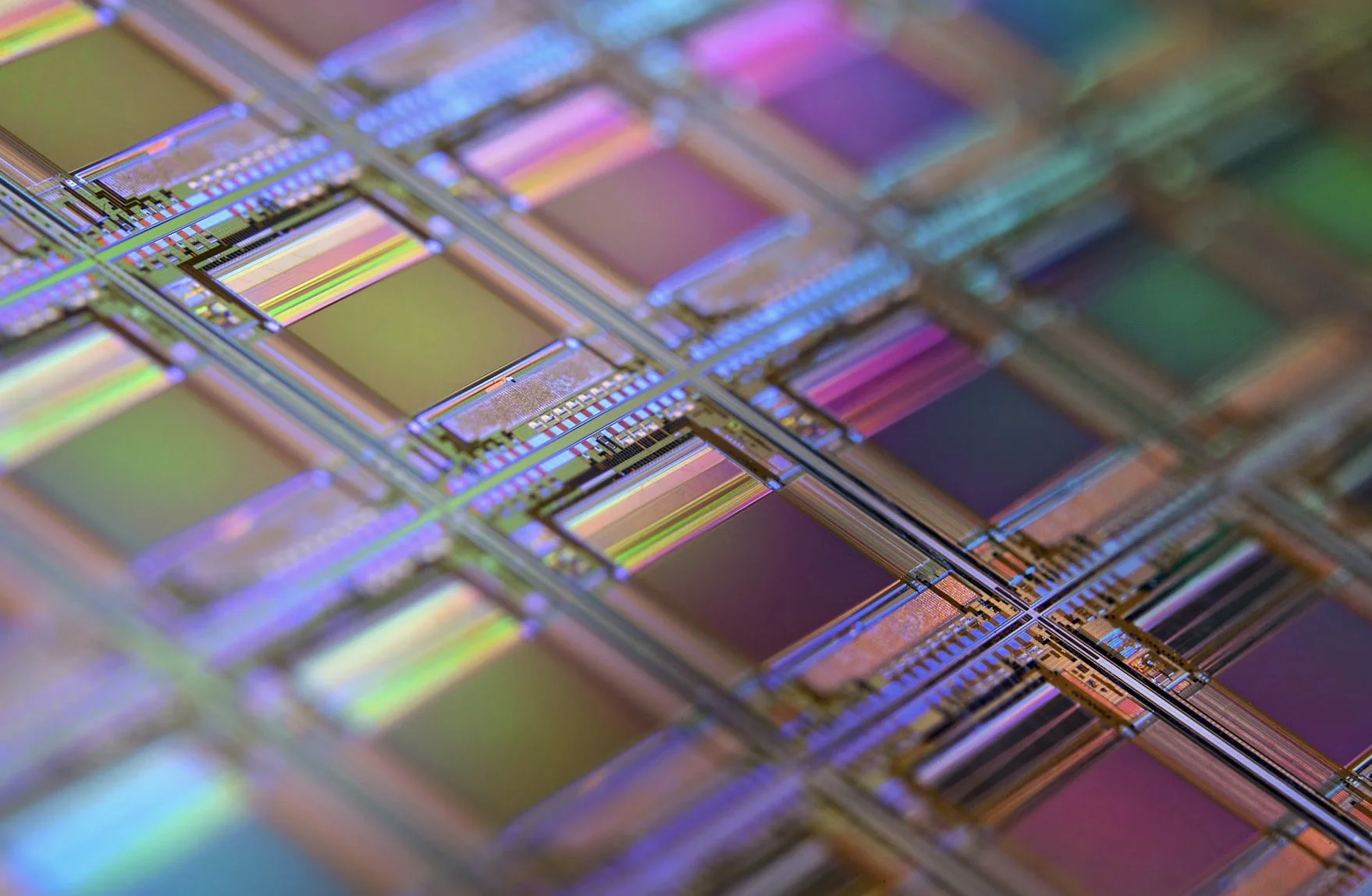
That changes the commercial meaning of the category. If thermal management helps decide whether chips can run harder, whether more compute can fit into the same footprint, whether battery systems can charge faster without damage, or whether more compact high power systems can operate with confidence over time, then it is doing more than preventing failure. It is helping define what the next step looks like.
This is where the current marketing starts to feel too small. It still presents thermal management as a supporting function, usually framed around protection, stability, and efficiency. Those things still matter. They are just no longer the whole story.
The market is still hearing cooling as maintenance, when what is increasingly being sold is cooling as permission. Permission for denser compute. Permission for more believable charging claims. Permission for smaller, harder working systems. Permission for longer life in expensive hardware.
That is a much bigger role than the category usually claims for itself.
When the hidden layer stops staying hidden
There is a useful comparison here.
In the early personal computing market, the processor was highly technical, expensive to develop, difficult to explain, and mostly invisible to the end user’s purchase decision. People bought computers, not processors. The finished machine carried the meaning, while the processor sat inside it as something important to specialists but largely abstract to everyone else.
Intel changed that. Intel Inside helped turn the processor from a hidden ingredient into part of the buying logic around the product itself. The processor did not become the product, but it did stop being commercially invisible. Buyers started to understand that something buried inside the machine was playing a serious role in performance, trust, and perceived quality.
That shift mattered in the short term because it gave Intel more visibility and a stronger position in the value chain. It mattered even more over time because it gave the hidden layer a visible share of the product’s meaning.
That is the part worth paying attention to here. Intel helped the market understand that the hidden layer inside the product was one of the reasons the product was worth choosing in the first place.
Thermal management is starting to sit in a similar position. Buyers may still choose the vehicle, the server, the power module, or the communications hardware, but the thermal layer underneath is increasingly shaping what those systems can credibly promise.
That does not mean thermal management companies need their own version of a sticker campaign. It means that once a hidden enabling technology becomes central enough to performance, the story around it can change the commercial balance around it too.
What happens when heat becomes part of the promise
Thermal management does not need to become fashionable in a superficial sense. It does not need to become a consumer slogan. The more interesting future is more serious than that.
It could become a recognised marker of industrial credibility.
In semiconductors and photonics, it could become part of whether next generation performance claims feel believable. In AI infrastructure, it could become part of whether scaling plans feel economically sound. In electrification, it could become part of how brands talk about charging consistency, battery life, safety, and long term reliability. In power electronics, it could become part of the confidence story around more compact and harder working systems.
That would be a meaningful change in status. The category would move away from being read as background support and closer to something that helps determine whether a product, platform, or infrastructure story holds together under pressure.
That is the larger opportunity here. Thermal management does not need a louder identity. It needs a more mature one.
A reminder from another hidden technology
Gorilla Glass did not begin as a glamorous consumer story. It came out of long cycle materials work that sat in the background for years before the smartphone era created the conditions for it to become commercially visible. Once that happened, it moved quickly from specialist material science into a recognised sign of product quality.

Source: Corning
That is worth remembering because it shows how long running technical work can stay commercially quiet for years and then become central once the market starts depending on it. The science does not suddenly become more real. The market simply catches up with its importance.
Thermal management now has some of that same quality. It has been real for a long time. The difference is that more sectors are now pushing up against the limits it controls.
Why better marketing matters now
This is not a market made up only of specialist startups, and it is not one that belongs entirely to the largest incumbents either. Large automotive and mobility suppliers have shaped thermal systems around powertrains, HVAC, battery control, and vehicle integration for years. Infrastructure and data centre firms are pushing more advanced cooling architectures as compute density rises. Materials firms remain central on the interface and heat transfer side. At the same time, specialist companies are emerging around tougher bottlenecks in chips, power electronics, and advanced computing.
That mix makes the category more interesting, but it also creates a familiar kind of friction. For companies working in this space, the difficulty often shows up long before anyone says a word about marketing. It appears in the shape of the conversation itself. Too many discussions begin with basic explanation. Too much time goes into helping the market frame the issue properly before the company even gets to the question of why its own approach matters.
That becomes heavier when the engineering is strong and the need is growing. A business can be doing serious work in an area that is becoming more important across semiconductors, compute infrastructure, electrification, power electronics, and photonics, and still find that the story around it sounds smaller than the role it is starting to play. The market hears cooling, reliability, efficiency, or protection, and those things are all real. What it does not always grasp quickly enough is that the company may be working on a limit that is starting to shape what future systems can actually do.
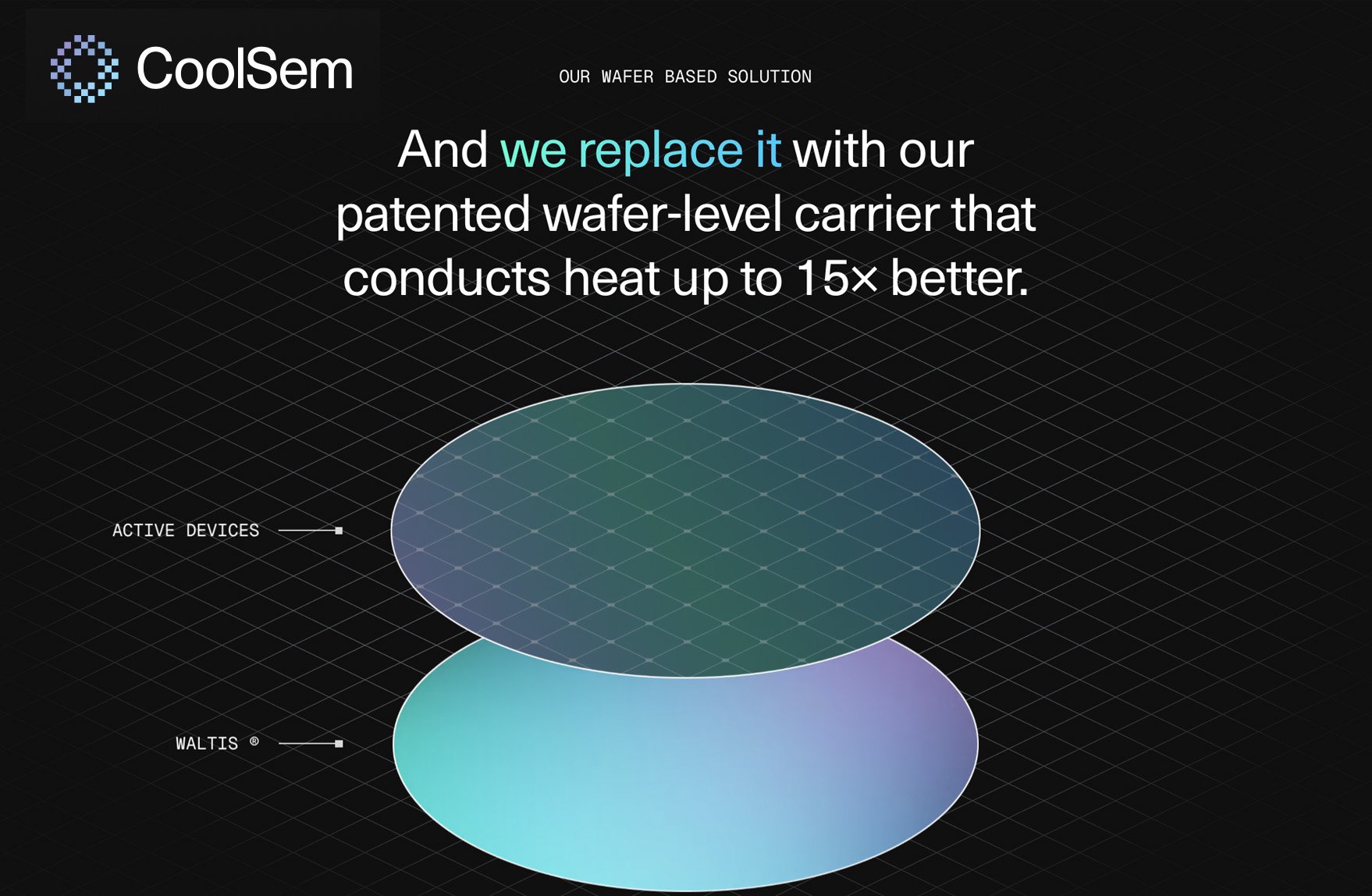
Source: CoolSem
You can see that in different parts of the field. CoolSem is working close to the source, at wafer level, in areas where thermal limits shape what more advanced electronic systems can become.
LiquidStack is working further downstream in liquid and immersion cooling, where the same pressure shows up at infrastructure scale across AI, hyperscale, and high performance computing. The products are different, the buyers are different, and the sales cycles are different, but the commercial drag has a familiar feel to it. The engineering is moving faster than the category language around it.
That has consequences. Strong technical companies can end up spending too much of the sales process establishing the size of the problem before they can talk properly about the quality of their solution. Buyers can take longer to see why the category matters. Partners and investors can understand the technical promise, but still struggle to place the company at the right level of commercial significance. Over time, that can leave businesses doing strategically important work sounding like they are offering a contained technical improvement inside a narrower buying decision.
This is where better marketing starts to matter in a more serious way. It helps the market understand the weight of the problem being solved, the reason the timing matters, and the scale of the change the technology makes possible. It gives the company a better chance of being understood in proportion to the importance of the work. The science still has to stand up. Qualification still takes time. Customers still need proof. But the path through those things becomes clearer when the story around the category has more maturity to it.
That matters for any company trying to remove a growing technical limit before the wider market has fully caught up with how important that limit is becoming.
Can a better story buy the category more time?
In some cases, yes.
Stronger category marketing can help protect long cycle investment by making the strategic importance of the work easier to understand. That does not mean marketing can substitute for proof. It means that when the engineering is real, a stronger market story can help hold conviction through the slower phases of maturation.
Intel Inside did this by turning a hidden technical ingredient into part of the market’s buying logic. Gorilla Glass did it by turning a long running materials story into a visible commercial asset once demand conditions changed. Thermal management may now need its own version of that move. The field needs a better claim on the value it creates.
That could have practical consequences. It could help specialist firms defend margin, help boards and investors see thermal innovation as a strategic capability rather than an internal technical spend, and help customers understand why waiting until thermal limits become painful is the wrong point to start caring about them. It could also help the industries that rely on these advances talk more honestly about what enables their own progress.
Before your story gets written for you…
Six Lines helps companies in complex technical categories turn hard engineering into clear commercial language. When a product sits underneath larger claims around performance, reliability, density, charging, efficiency, or system life, the market often ends up understanding the outcome better than the thing making it possible.
That creates a difficult position for businesses doing serious work in thermal management. The technology may be strong, the bottleneck may be real, and the commercial relevance may be growing, but the story around it can still sound too narrow. Buyers hear a component improvement when the real shift is much bigger than that.
Our role is to close that gap. We help companies explain what their technology changes, why the timing matters, where the real commercial pressure is building, and how the wider market should understand the value being created. That might mean sharper positioning, stronger website language, better investor and partner materials, or sales assets that make complex ideas easier to trust and easier to carry into the next meeting.
If your technology is solving a real thermal bottleneck, but the market still reads it like a small technical step, we should probably talk…